

There’s no magic number, and any answer that gives you a fixed count (3 keywords, 5 keywords, one keyword per 100 words) is oversimplifying a question that modern SEO doesn’t actually work this way anymore. The more useful framing is: one primary keyword per page, supported by a small cluster of closely related secondary and semantic terms that naturally belong in the same piece of content. How many that ends up being depends entirely on the topic, not a formula, which is exactly the kind of judgment call our SEO content writing services team makes on every page we plan.
People land on this question from a few different directions, wondering how many keywords per page SEO actually rewards, or simply how many keywords for SEO is reasonable before it starts to look forced. The underlying problem is the same either way: wanting a rule that removes the guesswork. Fair enough. Here’s the actual rule, and why it works better than a number.
The short answer
One page should target one primary keyword or search intent. If you’re asking how many keywords should I use for SEO on that same page, the answer is somewhere between 5 and 15 related secondary keywords and semantic variations across the page, in headings, body copy, and supporting sections, depending on how broad the topic is. That’s not a target to hit; it’s roughly what happens when you write a genuinely thorough page on one topic.
If you’re counting keywords and manually inserting them to hit a number, you’re optimizing for the wrong thing. If you’re writing comprehensively about one clear topic, the right number of keywords tends to show up on its own.
Why “how many keywords” is the wrong question
This question comes from an older era of SEO, back when search engines matched pages to queries largely by counting how often exact phrases appeared. Keyword density calculators, “use your keyword 3 to 5 times per 100 words” advice, and similar rules of thumb are leftovers from that period, and they’re a big part of why how many keywords for SEO gets treated as a formula instead of a judgment call.
Modern search engines, Google in particular, now evaluate content primarily through topical relevance and semantic understanding, not keyword frequency. Google’s systems can recognize that “cost of SEO,” “SEO pricing,” and “how much does SEO cost” are the same intent without needing every variation typed out verbatim. Chasing a keyword count is solving a problem search engines mostly solved on their end years ago.
The risk of still chasing a number is real, though: pages written to hit a keyword quota tend to read stiffly, repeat the same phrase awkwardly, and score worse on the actual thing that matters now, whether the content answers the query better than the competition.
The structure that actually works: one primary, several supporting
Instead of counting toward a number, structure each page around three tiers of keywords:
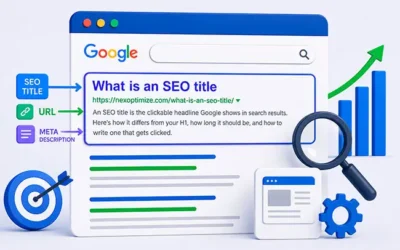
- Primary keyword (one per page) This is the exact search intent the page is built to satisfy. It should appear in the title tag, the H1, the URL slug, the meta description, and naturally within the first 100 words.
- Secondary keywords (roughly 3 to 8 per page) Close variations and related queries that share the same intent. For a page like this one, that includes questions phrased as how many keywords per page SEO rewards and how many SEO keywords per page starts to look excessive, phrases different searchers use for the same underlying question. These belong naturally in subheadings and body copy, not forced into every paragraph.
- Semantic and supporting terms (as many as the topic genuinely calls for) Related concepts, terminology, and entities a thorough article on the topic would naturally mention, things like “keyword density,” “keyword cannibalization,” “search intent,” “on-page SEO,” or “content structure” in this case. These don’t need deliberate placement; they show up when the content is actually comprehensive.
You’ll often see this third tier called “LSI keywords,” short for Latent Semantic Indexing. It’s worth knowing the term is technically a misnomer: Latent Semantic Indexing is an older information-retrieval technique, and there’s no confirmed evidence Google’s current ranking systems use it directly. The term stuck around in SEO circles anyway because it’s a convenient shorthand for “words and phrases semantically related to your topic.” Whatever you call them, the practical advice is the same: write about the topic fully enough that related terms appear naturally, rather than compiling a separate “LSI keyword list” to insert by hand.
That structure, not a total count, is what “how many keywords per page” should really be asking about.
A rough density guardrail, if you want one
If you need something more concrete than “write naturally,” a safe range for how often your primary keyword and its closest variants appear is roughly 0.5 percent to 1.5 percent of total word count, spread naturally rather than clustered. On a 1,500-word page, that’s somewhere around 8 to 20 total mentions of the primary term and its close variants combined, not the primary keyword alone repeated 20 times.
Anything meaningfully above that starts to read as keyword stuffing, which Google’s spam systems are specifically built to detect and can actively penalize rather than ignore.
Where keywords should actually go
Placement matters more than volume. Prioritize these spots, in order of impact:
- Title tag: primary keyword, ideally near the front
- URL slug: short, primary keyword only
- H1: primary keyword, phrased naturally
- First 100 words: primary keyword appears once, in context
- Subheadings (H2/H3): secondary keywords, spread across the ones that fit
- Meta description: primary keyword, written for click-through rather than for the algorithm
- Image alt text: where genuinely relevant, not stuffed
- Body copy: primary and secondary terms used wherever they’re the natural word choice
If a keyword doesn’t fit naturally in a given spot, leave it out of that spot. Forced placement is more damaging than a missed opportunity.
The mistake that undoes all of this: keyword cannibalization
This is the part most “how many keywords per page” advice skips entirely, and it’s arguably more important than the placement question. Keyword cannibalization happens when you spread the same or very similar keywords across multiple separate pages instead of consolidating them onto one strong page. Each page ends up competing against your own other pages for the same ranking spot, which splits your ranking signals and often means none of them rank as well as one consolidated page would.
In our own content planning, this is exactly why near-duplicate keyword variants, like the four different phrasings of “how many keywords per page” that this article is built around, get merged into a single comprehensive page rather than published as four separate, thinner articles. One page targeting all four variants thoroughly will consistently outperform four pages each chasing a slightly different phrasing of the same question.
Before adding a new keyword target to your content plan, check whether an existing page on your site already covers that intent. If it does, expand that page instead of creating a new one.
Common mistakes to avoid
- Treating every keyword variation as a separate page. As above, this splits authority instead of building it.
- Repeating the exact-match keyword unnaturally. Use natural variations (synonyms, related phrasing, plurals) instead of the identical string every time.
- Ignoring search intent while chasing volume. A high-volume keyword that doesn’t match what the page actually delivers will hurt engagement metrics and, indirectly, rankings.
- Stuffing keywords into image alt text or footer links. These are meant for accessibility and navigation first; treating them as extra keyword slots reads as manipulative to search engines.
- Forgetting the secondary and semantic layer entirely. A page optimized only for one exact phrase, with nothing supporting it, often looks thinner than a genuinely comprehensive competitor page.
FAQs
How many keywords should I use for SEO on one page?
One primary keyword, plus roughly 3 to 8 closely related secondary keywords and however many semantic terms the topic naturally calls for. There’s no fixed total count that applies across every page.
How many SEO keywords per page is too many?
There’s no hard ceiling, but once your primary keyword and its close variants exceed roughly 1.5 percent of total word count, or once phrasing starts to feel repetitive when read aloud, you’ve likely gone too far.
Can I target multiple keywords on the same page?
Yes, as long as they share the same core search intent. If two keywords represent genuinely different intents (informational versus commercial, for example), they usually belong on separate pages rather than forced onto one.
What happens if I target the same keyword on two different pages?
This causes keyword cannibalization: your own pages compete against each other, splitting ranking signals and often resulting in neither page ranking as well as one consolidated page would.
Does keyword density still matter for ranking in 2026?
It matters far less than it used to. Modern algorithms prioritize topical relevance and search intent over exact keyword frequency, though extreme keyword stuffing can still trigger spam detection.
Should every keyword variation get its own separate blog post?
No. Close variations of the same search intent, like different phrasings of the same question, should be merged into one comprehensive page rather than split across multiple thinner ones.
Are LSI keywords the same as semantic keywords?
In practice, yes, that’s how the term gets used. Technically “LSI keywords” borrows its name from an older technique Google isn’t confirmed to use directly, but the everyday meaning, related terms and phrases that naturally support your main topic, is the same idea as semantic keywords.