
If your business isn’t showing up when people in Teignmouth search on Google, you’re not alone, and it’s rarely down to one single problem. Usually it’s a mix of things: your Google Business Profile isn’t quite complete, your website is slow, your content doesn’t answer what people are actually asking, or your competitors have simply put more work into their SEO than you have.
The good news is that none of this is a mystery. Ranking well in Teignmouth comes down to a handful of areas: local SEO, content that actually helps people, a technically sound website, a well-run Google Business Profile, genuine reviews, and a few solid backlinks. Get those working together and Google starts to trust that your business is relevant to the people searching for it.
If you’d rather have someone handle this for you, working with an established provider of SEO services in Teignmouth can save a lot of trial and error. But if you want to understand what’s actually going on first, here’s a practical rundown.
Why you might not be ranking
There’s usually no single culprit. It could be that your website was never really built around the terms your customers use to search. Your Google Business Profile might be missing details or hasn’t been touched in months. Your pages might be thin on the kind of useful, locally-relevant content that Google wants to show people. Or there could be technical issues quietly getting in the way: slow load times, broken links, a site that’s a pain to use on a phone.
None of these are fixed with a quick trick. SEO is less about a single clever change and more about clearing away the things stopping Google, and your customers, from understanding what you do and why you’re worth choosing.
Get your local SEO right
If you serve customers in and around Teignmouth, local SEO isn’t optional. It’s the foundation everything else sits on. When someone types “plumber Teignmouth” or “café near Teignmouth seafront,” Google needs clear signals to know your business belongs in that conversation.
Sort out your Google Business Profile
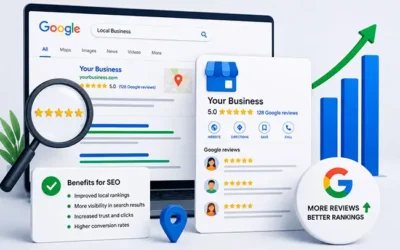
This is often the first thing worth fixing, and it’s free. Make sure your business name, category, services, phone number, website link and opening hours are all correct and consistent. An out-of-date profile does more harm than people realise. If your hours are wrong or your phone number’s outdated, that’s a lost customer before they even reach your site.
Add real photos, keep the profile active, and don’t ignore your reviews. Ask happy customers to leave one, and take the time to reply to feedback, good or bad, professionally. It shows people (and Google) that there’s an active, trustworthy business behind the listing.
Use local keywords the way people actually talk
Keyword research isn’t about guessing. It’s about finding out what your customers genuinely type into Google. Once you know that, weave it into your content naturally.
Rather than repeating “SEO Teignmouth” on every page, use a mix of related, natural phrases, things like “local SEO in Teignmouth,” “SEO company in Teignmouth,” or “local search optimisation.” Google is good at understanding context these days, so you don’t need to force your location into every sentence. Write like you’re talking to a real person, because you are.
Write content that actually answers questions
The best SEO content solves a problem someone already has. Before people ever contact you, they’re usually asking Google something first: how much does this cost, how do I choose the right provider, what’s the difference between X and Y, how do I maintain this once it’s done.
Those exact questions are your blog posts, guides and FAQ content sitting right there waiting to be written. A local business might cover pricing, common mistakes, regulations, or how a particular service actually works. This is also where you pick up long-tail traffic, searches that are more specific, less competitive, and often closer to a decision being made.
Match what people are actually looking for
Search intent is just a fancy way of describing why someone typed what they typed. “What is local SEO?” is someone doing research. “SEO company Teignmouth” is someone comparing providers. Someone searching a specific price is often close to picking up the phone.
Your content needs to meet people where they are. If they want a quick answer, give them one. Don’t bury it under three paragraphs of preamble. If they’re comparing options, give them the information that actually helps them decide. The closer your page gets to what someone actually wants, the better it performs.
Fix the technical side of your website
You can write the best article in Teignmouth, but if the website underneath it is clunky, none of that content will do its job properly.
Technical SEO is really about making sure Google, and your visitors, can actually use your site without friction. That means your important pages are easy to find, your internal links aren’t broken, your URLs make sense, and there’s nothing quietly getting in the way behind the scenes.
Speed and mobile experience matter more than you’d think
Nobody waits around for a slow website anymore. Oversized images, bloated scripts, cheap hosting and too many plugins are usually the culprits behind sluggish load times.
Mobile matters just as much, if not more. Text needs to be readable without zooming, navigation needs to be simple, and your contact details need to be easy to tap. If someone finds your business on their phone and has to hunt around for your number, you’ve probably already lost them to a competitor’s site.
Build trust and local authority
Ranking well isn’t only about what’s on your own website. Google also pays attention to how the rest of the internet talks about you.
Reviews and backlinks both count
Genuine reviews do more than reassure customers. They signal to Google that real people trust your business. Encourage them where you can, and don’t be tempted to fake or buy them.
Backlinks work in a similar way, but quality beats quantity every time. One relevant link from a respected local business, industry publication or organisation is worth far more than dozens of random, unrelated ones. Look for genuine opportunities: partnerships, local directories, suppliers, industry bodies. Avoid buying links in bulk; it tends to cause more problems than it solves.
Keep measuring, keep improving
SEO isn’t a one-off job you tick off a list. Tools like Google Search Console and Google Analytics will tell you a lot about how people are actually finding and using your site: traffic, impressions, clicks, keyword positions, conversions.
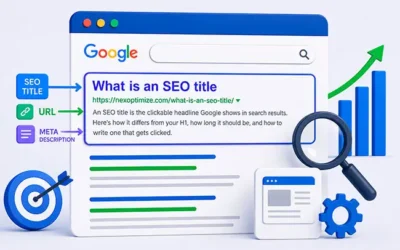
Sometimes you’ll spot a page that gets loads of impressions but hardly any clicks. That’s usually a sign the title or meta description needs work. Other times a page is sitting just off the first page, and a bit more content, better internal linking or a few more relevant links could be enough to push it over the line.
The point is to make decisions based on what the data’s actually telling you, rather than guessing.
When is it worth getting professional help?
You don’t need to hire someone for every small tweak. But if you’re competing in a crowded market, don’t have the time to stay on top of SEO yourself, or you’ve made changes and still can’t figure out why traffic isn’t coming, that’s usually when bringing in a specialist pays off.
A good SEO strategy pulls together keyword research, technical fixes, local optimisation, content and authority-building into one coherent plan, rather than a string of disconnected changes made without much direction.
Conclusion
Improving your Google rankings in Teignmouth really comes down to understanding what your customers are searching for and making your website the best possible answer to that search. Solid local SEO, a properly maintained Google Business Profile, genuinely useful content, a technically sound site, honest reviews and relevant backlinks all pull in the same direction.
The biggest mistake is treating SEO as something you do once and forget about. Rankings shift, competitors improve, and what people search for changes over time. Keep reviewing and refining, and you’ll give your business a much better shot at turning local searches into real enquiries.
FAQs
How can I improve my Google ranking in Teignmouth?
Target relevant local keywords, keep your Google Business Profile accurate and active, publish genuinely useful content, sort out technical issues on your website, and build up real reviews and relevant backlinks over time.
How long does SEO take to show results?
Usually a few months at minimum. It depends on how competitive your industry is, how established your website already is, what technical issues need fixing, and how consistently the work gets done.
Is local SEO actually important for a Teignmouth business?
Yes. It’s how people in and around the area find you on Google Search and Google Maps when they’re looking for what you offer.
What matters most in local SEO?
There isn’t one single factor that outweighs the rest. It’s the combination, an accurate Business Profile, relevant content, consistent business details, real reviews and general local authority, that makes the difference.
Do Google reviews actually help SEO?
Yes. Genuine, regular reviews build trust with both customers and Google. Trying to fake or inflate reviews tends to backfire and isn’t worth the risk.
Can professional SEO services actually improve my rankings?
Yes, when done properly. A good agency will spot the technical issues, content gaps and ranking opportunities you might miss, and put together a structured plan rather than a list of one-off fixes.