
Think of your website as a physical store in a massive shopping mall. Now imagine that mall has millions of stores, all selling similar things. How does a shopper, or in this case a search engine, find your store? The answer lies in two of the most powerful tools in digital marketing: keyword targeting and on-page SEO.
Whether you’re a blogger, a business owner, or a digital marketer, mastering these skills is no longer optional. It’s essential. In this visual guide, we’re going to break everything down step by step, so clearly that even a complete beginner can implement these strategies today. Ready? Let’s dive in.
What is Keyword targeting?
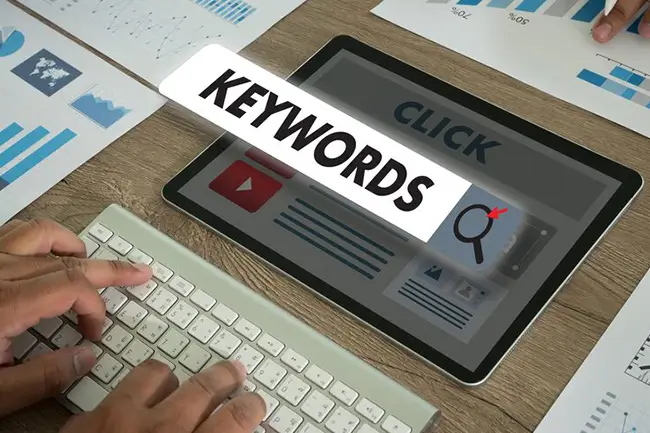
Keyword targeting is the process of identifying the specific words and phrases your audience types into search engines and then strategically using those words throughout your content to attract the right traffic. It’s like knowing the exact words your customer uses when they’re looking for what you offer, and then speaking that same language.
But here’s the thing. Keyword targeting isn’t just about stuffing words into a page. It’s about understanding people. It’s about connecting what you know with what they’re searching for.
Short-tail vs. Long-tail keywords
Picture a fishing net. Short-tail keywords are like a wide net. They catch a lot of fish, but not necessarily the ones you want. Long-tail keywords? They’re like a fishing rod with the perfect bait: targeted, precise, and far more effective.
- Short-tail keywords (also called head terms) are typically 1–2 words long, like “SEO tips” or “keyword research.” They have massive search volumes but brutal competition.
- Long-tail keywords are phrases of 3+ words, like “how to do keyword research for a new blog.” They have lower search volume but higher conversion rates because the user’s intent is crystal clear.
For most websites, especially newer ones, long-tail keywords are your best friend. They help you rank faster, attract more qualified visitors, and build topical authority over time.
Search intent: The hidden engine behind keywords
Here’s a question: why does someone type a specific phrase into Google? That “why” is called search intent, and it’s arguably the most important concept in modern SEO.
There are four main types of search intent:
- Informational – The user wants to learn something. (“What is on-page SEO?”)
- Navigational – The user wants to go somewhere. (“Moz SEO blog”)
- Commercial – The user is comparing options. (“Best keyword research tools 2026”)
- Transactional – The user is ready to buy or act. (“Buy SEMrush subscription”)
Matching your content to the right search intent isn’t just good practice. It’s a Google ranking signal. If you write a sales page when someone wants a how-to guide, you’ll bounce them right off your site.
How to do keyword research like a Pro
Keyword research is the foundation of everything. Skip this step, and you’re essentially building a house on sand. Here’s how to do it properly.
Tools you need for keyword research
You don’t need to guess what people are searching for. There are powerful tools that show you exactly that. Here are the top ones:
- Google Keyword Planner – Free, reliable, and directly from the source. Great for search volume and competition data.
- Ahrefs – One of the most comprehensive SEO suites available. Excellent for keyword difficulty analysis and competitor research.
- SEMrush – A powerful all-in-one tool with robust keyword research, site audit, and content analysis features.
- Ubersuggest – A more budget-friendly option great for beginners.
- Google Search Console – Free and essential. Shows you what keywords you’re already ranking for.
Analyzing keyword difficulty and search volume
When evaluating keywords, two metrics reign supreme:
- Search volume – How many people are searching for this keyword per month? Higher volume means more potential traffic, but also more competition.
- Keyword Difficulty (KD) – How hard will it be to rank for this keyword? A KD score of 0–30 is considered manageable for newer sites; anything above 60 requires serious domain authority.
The sweet spot? A keyword with moderate search volume and low-to-medium difficulty. Think of it like finding a gap in a crowded market. You want the lane where traffic is flowing but the road isn’t gridlocked.
What is On-Page SEO?
On-page SEO refers to all the optimization techniques applied directly on your webpage to improve its ranking in search results. Unlike off-page SEO (which focuses on backlinks and external signals), on-page SEO is entirely within your control.
It covers everything from your content and HTML tags to your URL structure and internal links. Think of it as tuning your car’s engine rather than relying on someone else to give you a push.
The anatomy of a perfectly optimized page
Let’s visualize a perfectly optimized page. Imagine it as layers of a well-built structure, each layer supporting the one above it.
Title tags and Meta descriptions
Your title tag is the single most important on-page SEO element. It’s what appears as the clickable headline in Google’s search results. Best practices include:
- Keep it under 60 characters
- Include your primary keyword near the beginning
- Make it compelling enough to earn the click
Your meta description doesn’t directly influence rankings, but it dramatically affects click-through rates (CTR). Write it like a mini-advertisement: 150–160 characters, action-oriented, and keyword-inclusive.
Header tags (H1–H4)
Header tags are like signposts in a city. They help both readers and search engines understand the hierarchy and structure of your content.
- H1 – Your page title. Use it once, and include your primary keyword.
- H2 – Major section headings. Use target keywords and related terms.
- H3 – Subpoints under H2 sections.
- H4 – Further breakdowns, great for detailed guides or tutorials.
Proper heading structure tells Google exactly what your page is about and how comprehensively you’ve covered the topic.
URL structure and slug optimization
A clean URL is like a clear street address. Compare these two:
- No: yourwebsite.com/p=1234?category=blog
- Yes: yourwebsite.com/on-page-seo-guide
Keep your URLs short, descriptive, and keyword-rich. Avoid stop words (like “and,” “the,” “of”) and use hyphens to separate words.
Keyword placement: Where and how to use keywords
Knowing which keywords to use is only half the battle. Knowing where to place them is the other half. Strategic keyword placement includes:
- Title tag – Always include your primary keyword here
- First 100 words – Establish relevance early in your content
- At least one H2 heading – Reinforce topical relevance
- Image ALT text – Describe your images using relevant keywords
- Meta description – Support CTR and signal relevance
- Throughout the body – Naturally woven, not forced
Keyword density vs. Keyword relevance
Forget the old “2% keyword density” rule. That era is long gone. Google’s algorithms have evolved far beyond simple keyword counting. Today, it’s all about topical relevance and semantic richness.
Instead of repeating your keyword ten times, focus on covering the topic so thoroughly that Google considers your page the definitive resource. Use synonyms, related phrases, and contextually appropriate language throughout.
Content optimization for On-Page SEO
Great content is the heartbeat of on-page SEO. No amount of technical optimization can rescue thin, low-quality content. Here’s how to make yours exceptional:
- Write for humans first, search engines second – If it reads naturally to a person, Google will likely reward it
- Aim for depth over length – A focused 1,500-word article beats a padded 3,000-word one
- Use formatting – Bullet points, bold text, tables, and images all improve readability and dwell time
- Add original insights – Share data, examples, case studies, or personal experience
LSI keywords and Semantic SEO
Latent Semantic Indexing (LSI) keywords are terms that are conceptually related to your primary keyword. For example, if your main keyword is “on-page SEO,” LSI keywords might include: meta tags, content optimization, search ranking, keyword placement, HTML structure.
Using LSI keywords signals to Google that your content covers a topic comprehensively, not just superficially. Tools like LSIGraph and Google’s “People Also Ask” section are goldmines for finding these terms.
Internal linking strategy
Internal links are the veins of your website. They carry authority from one page to another and help search engines crawl your site more effectively.
Best practices:
- Link to relevant, high-value pages using descriptive anchor text
- Aim for 3–5 internal links per article
- Update older content to link to newer, related posts
- Use a logical site architecture so link equity flows efficiently
Image SEO and visual optimization
Images do more than make your content look pretty. They contribute to SEO in meaningful ways.
- ALT text – Every image should have a descriptive ALT tag that includes relevant keywords where appropriate
- File naming – Name your files descriptively (e.g., on-page-seo-checklist.jpg vs. img001.jpg)
- Compression – Use tools like TinyPNG or ShortPixel to reduce file sizes without sacrificing quality
- Responsive images – Ensure images scale properly across all screen sizes
- Structured data – Use image schema markup to increase the chances of appearing in Google Image Search
Page speed and Core web vitals
Google’s Core Web Vitals are a set of performance metrics that measure the real-world user experience of your page. They include:
- LCP (Largest Contentful Paint) – How fast the main content loads. Aim for under 2.5 seconds.
- FID (First Input Delay) – How quickly the page responds to user interaction. Under 100ms is the target.
- CLS (Cumulative Layout Shift) – How stable the page layout is during loading. Aim for a score below 0.1.
Poor Core Web Vitals can actively hurt your rankings, especially on mobile. Use Google PageSpeed Insights to audit your pages regularly.
Mobile optimization and UX signals
Google operates on a mobile-first indexing model, meaning it primarily uses the mobile version of your site to determine rankings. If your site isn’t optimized for mobile, you’re already behind.
Key mobile SEO practices include:
- Use a responsive design that adapts to all screen sizes
- Avoid intrusive pop-ups that block content on mobile
- Ensure buttons and links are easily tappable
- Minimize the use of heavy scripts that slow mobile loading
- Test your site with Google’s Mobile-Friendly Test tool
UX signals like bounce rate, dwell time, and pages per session also influence rankings indirectly. If users land on your page and immediately leave, Google interprets that as a signal that your content isn’t satisfying the query.
Tracking and measuring On-Page SEO success
You can’t improve what you don’t measure. Here are the key tools and KPIs to track:
- Google Search Console – Monitor impressions, clicks, CTR, and average position
- Google Analytics 4 – Track user behavior, session duration, and conversion rates
- Ahrefs / SEMrush – Monitor keyword rankings and organic traffic trends
- Core Web Vitals Dashboard – Keep tabs on page experience signals
KPIs to focus on: organic traffic growth, keyword ranking improvements, CTR from search results, and bounce rate reduction.
Conclusion
Keyword targeting and on-page SEO aren’t just technical checklists. They’re the art and science of making your content findable, readable, and valuable. From choosing the right keywords and understanding search intent, to crafting perfect title tags and building smart internal links, every element works together like an orchestra. Get each instrument in tune, and the music, your rankings, will follow.
The beauty of on-page SEO is that it’s fully within your control. You don’t need to wait for backlinks or external validation. Start with one page, apply these principles, and watch the difference unfold. The search landscape in 2026 rewards those who are intentional, strategic, and human in their approach. Be all three.
FAQs
How many keywords should I target per page?
Ideally, focus on one primary keyword and 3–5 closely related secondary or LSI keywords per page. Targeting too many keywords dilutes your focus and can confuse search engines about your page’s core topic.
What is the ideal keyword density for SEO
There’s no magic number anymore. Rather than chasing a specific density percentage, focus on natural usage and topical completeness. Google’s NLP algorithms reward contextual relevance over repetition.
How long should an SEO-optimized article be?
It depends on the topic and competition. For comprehensive guides, 1,500–3,000 words tends to perform well. However, quality and relevance always trump length. A focused 800-word article can outrank a bloated 3,000-word one if it better satisfies user intent.
Do meta descriptions affect SEO rankings?
Meta descriptions don’t directly influence rankings, but they significantly impact click-through rates (CTR). A compelling meta description means more clicks, and higher CTR can indirectly signal relevance to Google.
How often should I update my on-page SEO?
At a minimum, review your key pages every 6–12 months. Update outdated information, refresh keyword targeting based on new research, and improve any elements flagged by tools like Google Search Console or PageSpeed Insights.
How does AI-generated content affect keyword targeting and on-page SEO
Google doesn’t penalize AI content outright, but it strongly rewards E-E-A-T (Experience, Expertise, Authoritativeness, and Trustworthiness). Whether you write manually or use AI assistance, your content must be original, accurate, and genuinely helpful. AI tools can help identify content gaps and semantic keyword opportunities, but human editorial oversight is still essential to ensure quality, intent alignment, and topical depth.
What is the difference between on-page SEO and technical SEO, and which should I prioritize first?
On-page SEO encompasses content and HTML elements, including keywords, headings, and meta tags. Technical SEO handles backend factors like crawlability, site speed, and indexing. Think of technical SEO as the foundation and on-page SEO as the structure built on top of it. Always fix critical technical issues first, then layer on your on-page optimization for the best results.
How does Google's AI Overviews impact on-page SEO and keyword targeting?
AI Overviews are changing how search results look, often reducing clicks on traditional organic listings. To stay visible, focus on conversational and question-based keywords, structure your content with clear definitions and concise paragraphs, and strengthen your E-E-A-T signals. Optimizing for featured snippets also improves your chances of being cited directly within AI-generated search responses.