

If your app is not being discovered or downloaded consistently, the issue is rarely the product alone. In most cases, the problem lies in how the app is positioned, indexed, and presented inside the app stores.
App Store Optimization (ASO) is not a one-time task. It is a structured, ongoing process that combines visibility, trust, and conversion. This checklist breaks down the exact elements that matter most when optimizing for the Apple App Store and Google Play, based on real ranking signals, user behavior, and long-term performance patterns.
Whether you are launching a new app or trying to scale an existing one, this checklist helps ensure nothing critical is missed.
1. App Store Optimization Discovery and Baseline Review
Before changing anything, you need clarity.
A proper ASO process starts with understanding where your app currently stands and why.
Checklist:
- Review current keyword rankings for brand and non-brand terms
- Analyze install trends, conversion rates, and retention signals
- Identify which store drives stronger performance and why
- Benchmark against top competitors in your category
- Confirm primary growth goal (visibility, installs, revenue, retention)
Skipping this step often leads to wasted effort. Optimization without context usually improves the wrong metrics.
2. Keyword Research and Opportunity Mapping
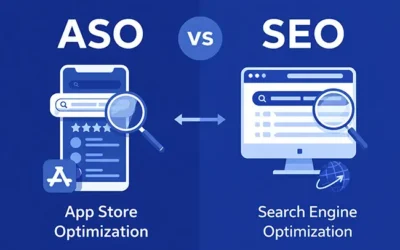
Keywords remain a foundational ranking signal, but ASO keyword research is not the same as SEO keyword research.
You are not just looking for volume. You are looking for install intent.
Checklist:
- Identify high-intent search terms users actually install from
- Separate discovery keywords from branded and feature-based terms
- Avoid overly competitive keywords with unrealistic ranking potential
- Map keywords to app name, subtitle, description, and keyword field
- Track keyword volatility and seasonality
Strong ASO keyword strategy balances relevance, competition, and conversion likelihood.
3. App Name Optimization
The app name is the single strongest ranking signal across both major app stores.
However, over-optimizing here can damage trust.
Checklist:
- Maintain brand clarity while supporting keyword relevance
- Avoid keyword stuffing or unnatural phrasing
- Ensure the app name aligns with user expectations
- Validate readability across devices and screen sizes
- Confirm compliance with app store guidelines
A well-optimized app name improves rankings and user confidence at the same time.
4. Subtitle and Short Description Optimization
This space influences both indexing and decision-making.
Users scan. They do not read.
Checklist:
- Clearly communicate the app’s primary value
- Reinforce relevance for core keywords
- Highlight one or two differentiators, not everything
- Keep language simple, benefit-driven, and human
- Avoid marketing hype or vague claims
This section often determines whether a user scrolls or installs.
5. Keyword Field Optimization (Apple App Store)
Invisible does not mean unimportant.
The Apple keyword field plays a major role in discoverability when structured correctly.
Checklist:
- Use comma-separated keywords without repetition
- Avoid plurals, filler words, and unnecessary variations
- Prioritize relevance over volume
- Regularly refresh based on ranking performance
- Align keyword field choices with listing content
Precision here creates ranking leverage without impacting user experience.
6. App Description Optimization (Google Play Focus)
While Apple descriptions influence conversion more than rankings, Google Play descriptions directly affect discoverability.
Checklist:
- Structure descriptions for readability and clarity
- Use keywords naturally, not aggressively
- Address common user objections and use cases
- Highlight real benefits instead of features alone
- Maintain consistency with visuals and messaging
Descriptions should reassure users they are making the right choice.
7. Screenshot and Visual Asset Optimization
Screenshots are conversion assets, not decorations.
Most users decide within seconds whether to install.
Checklist:
- Lead with the strongest value proposition
- Use simple, benefit-focused captions
- Show real product experiences, not abstract visuals
- Maintain visual consistency across screenshots
- Test different sequences and messaging angles
High-converting visuals reduce friction and build trust instantly.
8. App Preview Videos and Promo Assets
Especially on Google Play, video assets influence both engagement and conversion.
Checklist:
- Communicate value within the first 5 seconds
- Avoid long intros or branding-heavy openings
- Focus on real use cases and outcomes
- Keep videos concise and easy to understand
- Test performance across different audiences
Videos should reduce uncertainty, not create it.
9. Ratings and Reviews Management
User sentiment directly affects conversion and long-term ranking signals.
Ignoring reviews is one of the fastest ways to stall growth.
Checklist:
- Monitor review sentiment trends regularly
- Identify recurring complaints or friction points
- Respond to reviews professionally and constructively
- Implement ethical review growth strategies
- Align product updates with user feedback insights
Trust compounds when users feel heard.
10. Competitive ASO Analysis
Your app does not exist in isolation.
Competitors define user expectations and category norms.
Checklist:
- Analyze top-ranking competitors’ keywords and visuals
- Identify positioning gaps others are not addressing
- Monitor changes in competitor listings over time
- Avoid copying tactics blindly
- Use insights to differentiate, not imitate
The goal is not to look similar. It is to stand out for the right reasons.
11. Ongoing Testing and Iteration
ASO is never finished.
Algorithms change. User behavior evolves.
Checklist:
- A/B test visuals, messaging, and metadata
- Track keyword movement after updates
- Monitor conversion rate changes closely
- Document learnings from each test
- Iterate based on data, not assumptions
Sustainable growth comes from consistent refinement, not one-time optimization.
How This Checklist Fits Into Professional ASO Services
Executing this checklist effectively requires tools, experience, and ongoing analysis. Many apps struggle not because they lack effort, but because decisions are made without the full picture.
Professional app store optimization services apply this checklist systematically, backed by data, testing frameworks, and platform-specific expertise to drive measurable growth over time.
If you want to understand how these steps are applied at scale, explore our app store optimization services to see how we help apps increase visibility, improve conversion rates, and achieve long-term performance gains.
Final Thought
ASO is not about gaming algorithms.
It is about clarity, relevance, and trust.
When users understand your app quickly and feel confident in its value, installs follow naturally. This checklist gives you the structure needed to build that confidence consistently.
FAQs
What is the most important factor in app store optimization?
The most important ASO factor is relevance. App stores prioritize apps that closely match user search intent through the app name, keywords, metadata, and conversion performance. High relevance combined with strong conversion rates leads to sustainable rankings.
How often should app store optimization be updated?
ASO should be reviewed monthly at minimum. Keyword performance, competitor behavior, user feedback, and algorithm updates change regularly. Continuous testing and iteration are essential for long-term growth.
Is app store optimization better than paid user acquisition?
ASO and paid acquisition serve different purposes. ASO delivers long-term, compounding organic installs, while paid acquisition provides immediate visibility. The most effective growth strategies use ASO as a foundation and paid campaigns as a supplement.
Can ASO work for new apps with no downloads?
Yes. ASO is especially important for new apps because it helps establish relevance, improve early conversion rates, and generate organic installs without relying entirely on paid traffic.
What is the difference between ASO for Apple App Store and Google Play?
Apple App Store ASO relies heavily on the app name, subtitle, and keyword field, while Google Play places more emphasis on app descriptions, user engagement, and long-term performance signals. Each platform requires a tailored strategy.
How long does it take to see results from app store optimization?
Initial improvements may appear within 2 to 4 weeks, but meaningful and stable growth usually occurs over 2 to 3 months. ASO is a cumulative process, not an instant result tactic.
Do ratings and reviews affect app store rankings?
Yes. Ratings and reviews influence both user trust and algorithmic signals. Higher-quality reviews, improved sentiment, and consistent feedback can positively impact conversion rates and long-term visibility.